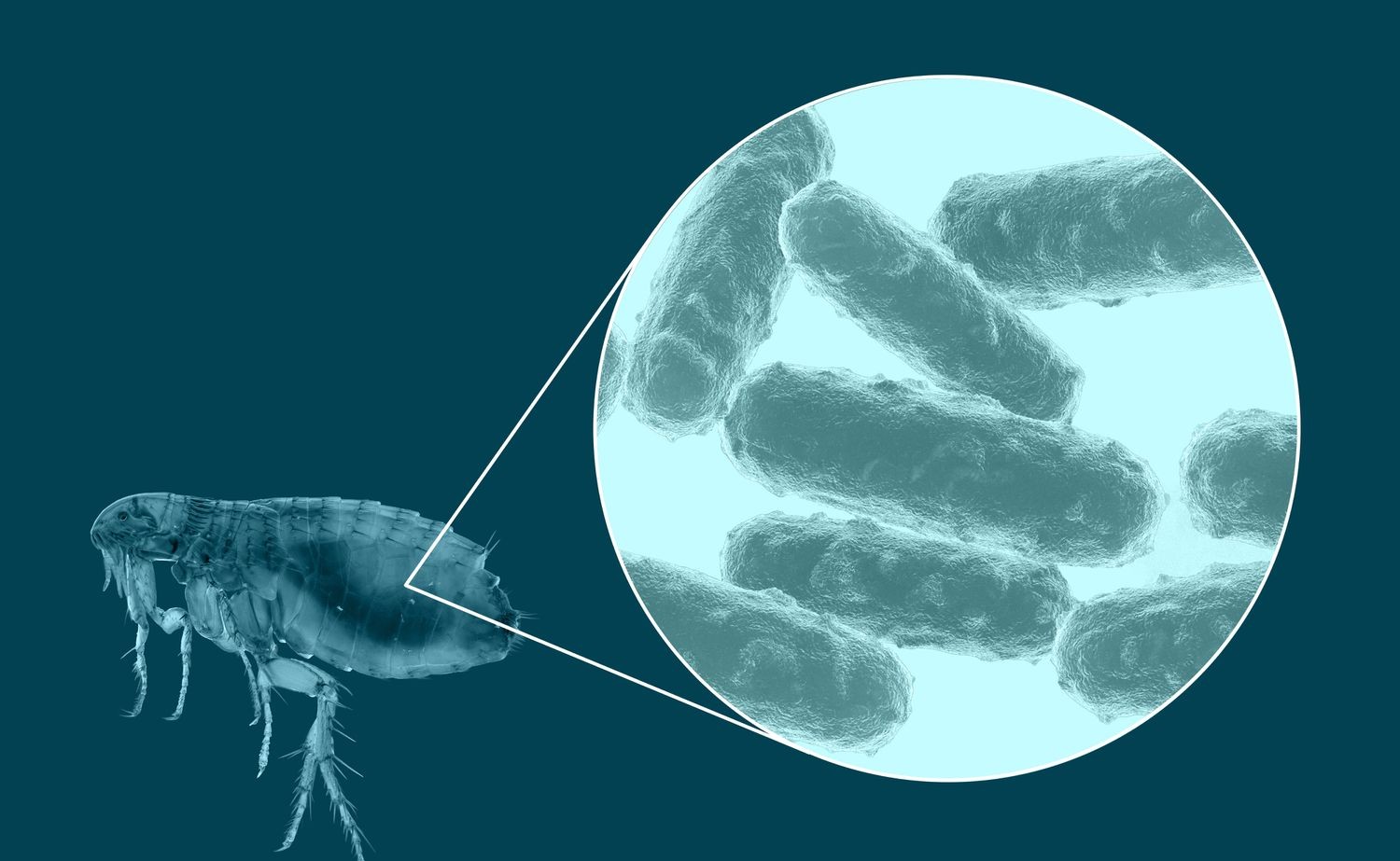
Plague
Introduction
- The plague is an infectious disease caused by the bacterium Yersinia pestis. This bacterium primarily affects small mammals and their fleas, but it can also infect humans, leading to serious health consequences.
- Historically, the plague has caused devastating pandemics, including the infamous "Black Death" in the 14th century.
- Today, although rare, the plague still exists in certain parts of the world and can be treated with antibiotics if diagnosed early.
Key Facts
- Causative Agent: Yersinia pestis, a zoonotic bacterium.
- Hosts: Commonly found in small mammals and their fleas.
- Incubation Period: Symptoms typically appear within one to seven days after exposure.
- Main Forms: Bubonic and pneumonic are the two main clinical forms of the plague.
- Transmission: Plague can spread through flea bites, contact with infected tissues, and inhalation of infected droplets.
- Severity: Bubonic plague has a 30% to 60% fatality rate if untreated, while pneumonic plague is nearly always fatal if not treated promptly.
- Treatment: Antibiotics are effective against the plague, especially if administered early.
- Endemic Countries: The Democratic Republic of the Congo, Madagascar, and Peru are currently the most affected.
What Causes the Plague?
The plague is caused by the bacterium Yersinia pestis, which typically resides in small mammals and their fleas. Humans can contract the disease through:
- Flea Bites: When an infected flea bites a human.
- Contact with Infected Tissues: Handling animals or materials contaminated with the bacteria.
- Inhalation of Infected Droplets: Breathing in droplets from a person with pneumonic plague.
Signs and Symptoms
People infected with the plague usually develop symptoms within one to seven days. The initial symptoms often include:
- Sudden Fever: A rapid increase in body temperature.
- Chills: Shivering and feeling cold due to the fever.
- Headache: Intense pain in the head, often accompanied by sensitivity to light.
- Body Aches: Generalized muscle and joint pain.
- Weakness: Feeling fatigued and lacking energy.
- Vomiting and Nausea: Feeling sick to the stomach and possibly vomiting.
As the disease progresses, more severe symptoms can develop depending on the type of plague:
Bubonic Plague
- Swollen Lymph Nodes (Buboes): The hallmark symptom of bubonic plague is the appearance of painful, swollen lymph nodes, usually in the groin, armpit, or neck. These swellings are called buboes and can become as large as an egg. They are tender and often warm to the touch.
- Septicemia: If the bacteria spread to the bloodstream, it can cause septicemia, leading to symptoms such as bleeding under the skin, abdominal pain, shock, and organ failure.
- Gangrene: In severe cases, septicemia can cause tissue death, particularly in the fingers, toes, and nose, leading to gangrene.
Pneumonic Plague
- Coughing and Shortness of Breath: Pneumonic plague primarily affects the lungs, leading to a severe, productive cough, chest pain, and difficulty breathing.
- Hemoptysis: The cough may produce bloody or watery sputum (hemoptysis).
- Rapid Progression: Symptoms can worsen rapidly, leading to respiratory failure, shock, and death if not treated within 24 hours.
Septicemic Plague
- Severe Systemic Infection: Septicemic plague occurs when the bacteria spread throughout the bloodstream, causing a systemic infection.
- Bleeding and Blood Clots: This form can cause disseminated intravascular coagulation (DIC), leading to widespread blood clots and bleeding under the skin, in organs, or from orifices.
- Necrosis: As the infection progresses, it can cause necrosis (tissue death), particularly in the extremities, resulting in gangrene.
- Shock: Septicemic plague can cause septic shock, a life-threatening condition where blood pressure drops dangerously low.
Types of Plague
The plague manifests in three primary forms, depending on how the infection spreads in the body:
1. Bubonic Plague
Bubonic plague is the most common form of the disease. It is named after the characteristic "buboes," which are swollen, painful lymph nodes that appear close to the site of the flea bite. These buboes are often located in the groin, armpits, or neck and are a result of the immune system's attempt to fight off the infection. If left untreated, the bacteria can spread through the bloodstream to other parts of the body, leading to more severe forms of the plague.
- Transmission: Primarily through the bite of an infected flea.
- Symptoms: Buboes, fever, chills, headache, and muscle aches.
- Complications: Can progress to septicemic or pneumonic plague if untreated.
2. Pneumonic Plague
Pneumonic plague is the most dangerous form because it can spread directly from person to person through airborne droplets. This form occurs when the Yersinia pestis bacteria infect the lungs. It can develop as a primary infection from inhaling the bacteria or as a secondary complication of untreated bubonic or septicemic plague.
- Transmission: Person-to-person via respiratory droplets, or as a complication of bubonic/septicemic plague.
- Symptoms: Severe pneumonia, chest pain, coughing up blood, and difficulty breathing.
- Complications: Rapid progression to respiratory failure and death if not treated within 24 hours.
3. Septicemic Plague
Septicemic plague occurs when the infection spreads into the bloodstream, leading to a severe and often fatal systemic infection. This form can develop as a complication of untreated bubonic or pneumonic plague, or it can occur on its own. It is characterized by widespread infection that can lead to septic shock and multi-organ failure.
- Transmission: Can develop from bubonic or pneumonic plague; also through direct contact with contaminated fluids or tissues.
- Symptoms: Fever, chills, extreme weakness, abdominal pain, shock, and internal bleeding.
- Complications: High mortality rate, especially if untreated.
Difference between bubonic and pneumonic plague
| Aspect | Bubonic Plague | Pneumonic Plague |
|---|---|---|
| Causative Agent | Yersinia pestis | Yersinia pestis |
| Transmission | Primarily through flea bites | Inhalation of respiratory droplets, or as a complication of bubonic or septicemic plague |
| Affected Area | Lymphatic system | Respiratory system (lungs) |
| Characteristic Symptom | Swollen and painful lymph nodes (buboes) | Severe pneumonia, chest pain, coughing up blood (hemoptysis) |
| Incubation Period | 2-6 days | 1-4 days |
| Mortality Rate (Untreated) | 30% to 60% | Almost 100% |
| Person-to-Person Transmission | Rare | Common |
| Treatment | Antibiotics (e.g., streptomycin, gentamicin, doxycycline) | Antibiotics (e.g., streptomycin, gentamicin, doxycycline) |
| Severity | Severe if untreated, but generally slower progression than pneumonic plague | Extremely severe, rapid progression; often fatal within 24 hours if untreated |
| Isolation Requirement | Not typically required for bubonic plague | Mandatory isolation due to high transmissibility |
Difference between bubonic, pneumonic plague and Septicemic Plague
| Aspect | Bubonic Plague | Pneumonic Plague | Septicemic Plague |
|---|---|---|---|
| Causative Agent | Yersinia pestis | Yersinia pestis | Yersinia pestis |
| Transmission | Primarily through flea bites | Inhalation of respiratory droplets, or as a complication of bubonic or septicemic plague | Flea bites, direct contact with infected materials, or as a complication of bubonic plague |
| Affected Area | Lymphatic system | Respiratory system (lungs) | Bloodstream |
| Characteristic Symptom | Swollen and painful lymph nodes (buboes) | Severe pneumonia, chest pain, coughing up blood (hemoptysis) | Abdominal pain, shock, bleeding into the skin and other organs |
| Incubation Period | 2-6 days | 1-4 days | Hours to a few days |
| Mortality Rate (Untreated) | 30% to 60% | Almost 100% | Close to 100% |
| Person-to-Person Transmission | Rare | Common | Not directly transmissible |
| Treatment | Antibiotics (e.g., streptomycin, gentamicin, doxycycline) | Antibiotics (e.g., streptomycin, gentamicin, doxycycline) | Antibiotics and supportive care, often requires intensive medical intervention |
| Severity | Severe if untreated, but generally slower progression than pneumonic plague | Extremely severe, rapid progression; often fatal within 24 hours if untreated | Extremely severe, rapid progression; often fatal within hours if untreated |
| Isolation Requirement | Not typically required for bubonic plague | Mandatory isolation due to high transmissibility | Not required, as it is not transmissible between humans |
Historical Context: The Black Death
The Black Death, which occurred in the 14th century, was one of the most devastating pandemics in human history, resulting in over 50 million deaths across Europe. The pandemic was primarily caused by the bubonic plague, which spread rapidly due to the lack of medical knowledge, poor hygiene, and overcrowded living conditions. Fleas carried by rats were the main vectors, and as the disease spread from town to town, it decimated populations. The lack of effective treatments and understanding of how the disease spread led to widespread panic and fear. The social, economic, and cultural impacts of the Black Death were profound, shaping the course of European history. Although the plague has become less common today, it has not disappeared entirely, and isolated outbreaks still occur.
How Common is the Plague?
Plague cases are rare today, with most occurring in rural areas of Africa, Asia, and South America. The Democratic Republic of the Congo, Madagascar, and Peru are the most endemic countries, where the bacteria persist in rodent populations and their fleas. Although rare, cases do still occur, often in areas where humans live in close contact with rodent populations. In the United States, for example, a few cases are reported each year, primarily in the southwestern states where the bacteria are present in wild rodent populations.
Is plague airborne?
- Pneumonic plague affects the lungs and is transmitted when a person breathes in.
- Pestis particles in the air. Bubonic plague is transmitted through the bite of an infected flea or exposure to infected material through a break in the skin.
- Symptoms include swollen, tender lymph glands called buboes.
Diagnosing the Plague
Diagnosing the plague involves a combination of clinical examination and laboratory testing. Given the severity and rapid progression of the disease, early diagnosis is critical. Healthcare providers look for signs such as fever, swollen lymph nodes (buboes), and respiratory symptoms. Laboratory testing is essential for confirmation and typically involves:
- Sample Collection: Samples of blood, sputum, or pus from buboes are collected.
- Laboratory Testing: The presence of Yersinia pestis can be confirmed through culture, PCR, or serological tests.
- Rapid Tests: In endemic areas, a rapid dipstick test is available to detect specific antigens related to Yersinia pestis.
Early diagnosis allows for timely treatment, which significantly improves the chances of survival.
Treatment
Early diagnosis and treatment with antibiotics are essential for surviving the plague. Common antibiotics used to treat the plague include streptomycin, gentamicin, doxycycline, and ciprofloxacin. The choice of antibiotic may depend on the patient's condition, the severity of the disease, and local resistance patterns. In most cases, treatment must begin as soon as possible, ideally within 24 hours of symptom onset, to prevent serious complications and death. In addition to antibiotics, supportive care such as intravenous fluids, oxygen, and respiratory support may be necessary, particularly for patients with pneumonic plague.
- Streptomycin: Considered the most effective treatment for plague, especially in severe cases.
- Gentamicin: An alternative to streptomycin, often used when the latter is not available.
- Doxycycline and Ciprofloxacin: Effective for less severe cases and as prophylaxis for those exposed to the bacterium.
Prevention
Preventive measures against plague focus on reducing the risk of transmission and protecting those at high risk. These measures include:
- Avoiding Flea Bites: Using insect repellent, wearing protective clothing, and reducing exposure to rodent-infested areas.
- Safe Handling: Avoiding direct contact with potentially infected animals, tissues, or fluids. This includes handling dead animals with care and using protective equipment.
- Isolating Infected Patients: Preventing the spread of pneumonic plague through strict isolation procedures, including the use of masks and other protective gear by healthcare workers.
- Public Health Measures: Monitoring and controlling rodent populations, especially during outbreaks, to prevent the spread of the disease.
Vaccination
Currently, there is no widely used vaccine for plague. The World Health Organization (WHO) does not recommend vaccination for the general public but advises it for high-risk groups, such as laboratory personnel and healthcare workers who may be exposed to the bacterium. Research is ongoing to develop more effective vaccines that could be used in the event of a bioterrorism threat or in high-risk areas.
Managing Plague Outbreaks
Effective management of plague outbreaks involves a coordinated public health response. Key strategies include:
- Identifying the Source: Determine the likely source of infection, often linked to areas with high rodent mortality.
- Infection Control: Implement strict infection control measures, including the isolation of patients with pneumonic plague and the use of personal protective equipment.
- Vector and Rodent Control: Control flea populations first, followed by rodent populations, to prevent fleas from seeking new hosts.
- Healthcare Worker Protection: Provide training and protective equipment to healthcare workers, and offer chemoprophylaxis with antibiotics as needed.
- Surveillance and Monitoring: Monitor close contacts of infected individuals and provide prophylactic treatment to prevent further spread.
- Safe Burial Practices: Ensure safe handling and burial of deceased individuals to prevent post-mortem transmission.
Can the Plague Come Back?
While modern medicine and public health measures have significantly reduced the threat of plague, the disease has not been eradicated. Plague could potentially re-emerge in areas where the bacterium still exists in wildlife reservoirs, especially if public health systems break down or if there is a lack of awareness and preparedness. Continuous monitoring and quick response to outbreaks are essential to prevent the resurgence of this ancient disease.
Conclusion
The plague, caused by Yersinia pestis, remains a serious but treatable disease. Understanding its history, forms, and methods of transmission is crucial for preventing and managing outbreaks. While it no longer causes the widespread devastation seen in the past, vigilance and early intervention are key to controlling this deadly disease.
