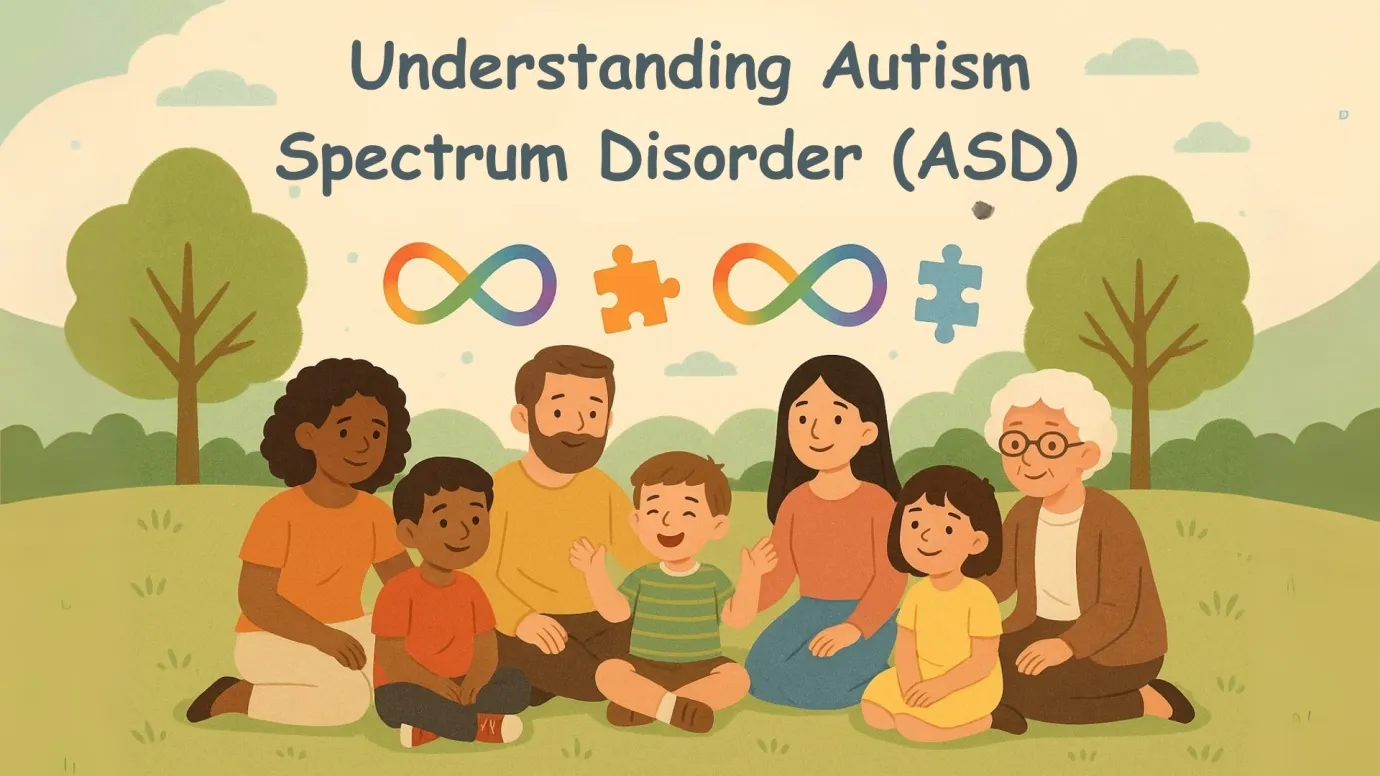
Understanding Autism Spectrum Disorder (ASD)
A Complete Guide for Parents, Educators & Caregivers
Introduction
Autism Spectrum Disorder (ASD) is a complex neurodevelopmental condition that affects individuals differently. This guide provides a comprehensive overview of ASD, offering insights for parents, educators, and those looking to support individuals on the autism spectrum.
1. What is Autism Spectrum Disorder?
Autism Spectrum Disorder is a lifelong condition that affects how individuals perceive the world and interact with others. It is characterized by difficulties in social communication, repetitive behaviors, and a range of challenges that vary widely in severity.
2. The Different Types of Autism
- Classic Autism (Autistic Disorder) — Significant challenges in communication, social interactions, and repetitive behaviors.
- Asperger's Syndrome — Milder symptoms, strong verbal skills, average or above-average intelligence.
- PDD-NOS (Atypical Autism) — Some but not all characteristics of autism.
- Childhood Disintegrative Disorder (CDD) — Rare condition where children lose previously acquired skills.
3. Early Signs of Autism
• Limited eye contact
• Lack of response to name
• Delayed speech
• Hand-flapping, rocking
• Strict routines
• Intense focus on specific interests
4. What Parents Should Look For
Monitor developmental milestones, seek professional evaluation if needed, and start early intervention as soon as possible.
5. Autism and Education
Individualized Education Programs (IEPs), inclusive education, and social skills training play a vital role.
6. The Role of Diet and Nutrition
Some families report benefits from Gluten-Free Casein-Free (GFCF) diet, omega-3, and supplements. Always consult a doctor before making changes.
7. The Role of Genetics in Autism
Genetics play a major role. Autism tends to run in families, though the exact pattern is complex.
Conclusion
With early intervention, proper support, and understanding, individuals with autism can lead fulfilling and meaningful lives.
